Comparisons
Printful vs Printify (2026): Which Print-on-Demand Platform Actually Wins?
Printful and Printify merged under one parent company in 2024, but they still run differently and serve different types of sellers. Here's which one actually wins for most people in 2026.
Verdict up front: Printify wins for most sellers. Bigger catalog (1,000+ vs ~350+ products), lower base prices on bestsellers, and 10 million+ merchants can’t all be wrong. Printful is still the better pick if brand consistency and premium blanks matter more to you than margin.
Here’s the honest breakdown.
The Elephant in the Room: They’re Now the Same Company
In November 2024, Printful and Printify merged under a parent company called FYUL. Same leadership umbrella. Two separate platforms — for now.
This matters for one reason: neither platform is going anywhere. If you’ve been holding off on committing because you weren’t sure which would survive long-term, that concern is off the table.
Both still run independently. Pricing, catalogs, supplier networks — all separate. The merger just means shared resources at the corporate level. Day-to-day for sellers, nothing has changed.
Quick Comparison
| Feature | Printful | Printify |
|---|---|---|
| Free plan | Yes | Yes |
| Paid plan starts at | $24.99/month | $29/month ($24.99/month annual) |
| Product catalog | ~350+ products | 1,000+ products |
| Print providers | 17 own facilities | 90+ third-party providers |
| Shopify / Etsy / WooCommerce | Yes | Yes |
| Free design tools | Yes | Yes (with AI generation) |
| Warehousing | Yes | No |
| Embroidery digitization | Free on Growth plan | Varies by provider |
Pricing
Prices verified from official Printful (printful.com/pricing) and Printify (printify.com/pricing) pages on November 7, 2026.
Printful Pricing
Printful has three tiers:
- Free — no monthly fee; standard product prices apply; unlimited products and stores
- Growth ($24.99/month) — up to 33% off on products, free embroidery digitization, branded packaging, and priority support
- Business ($249/month) — everything in Growth plus custom branding options, dedicated account manager, and API access
The free tier works fine for new stores testing the market. Once you’re doing consistent monthly volume, the Growth plan math becomes straightforward: at $24.99/month, it pays for itself after a modest number of orders, depending on your average order size and product mix.
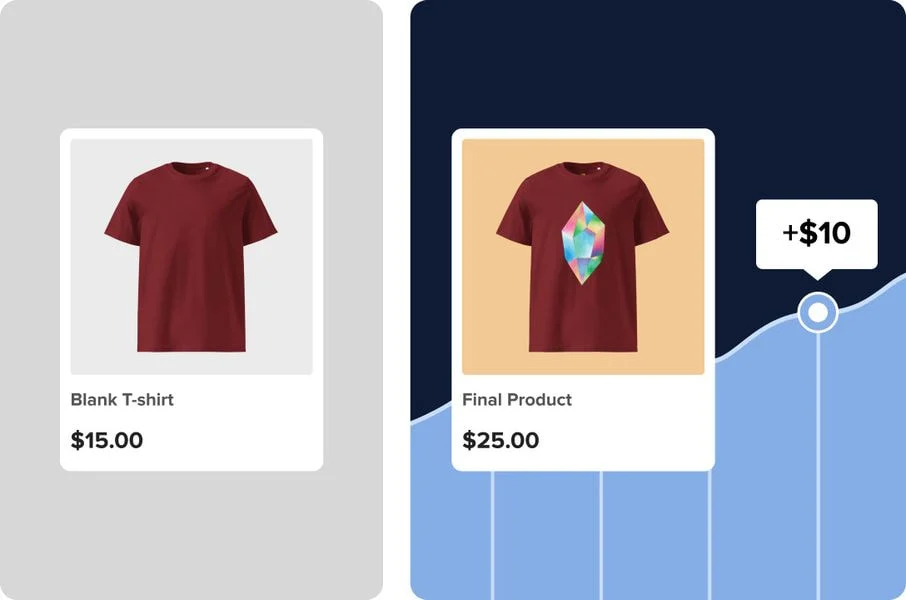
Printful does not charge transaction fees on top of your subscription. You pay the product base price, you set your retail price, and the difference is your margin.
Printify Pricing
Printify also has three tiers:
- Free — unlimited product designs, up to 5 stores, access to full catalog
- Premium ($29/month or $24.99/month billed annually) — up to 20% discount on all products, up to 10 stores, custom order import
- Enterprise — custom pricing, unlimited stores, early feature access, dedicated support
The Premium plan at $24.99/month annual is the same price as Printful’s Growth tier. At that price point, Printify’s 20% discount across a bigger catalog typically produces lower landed costs per item — particularly on high-volume basics like t-shirts and hoodies.
The pricing verdict: Similar subscription costs at the paid tier. Per-product costs tend to favor Printify because its network of competing suppliers creates downward pressure on base prices. You can compare multiple providers for the same product and pick the best combination of price and quality.
Product Catalog
This is where Printify wins most convincingly.
Printful: Around 350+ products — primarily apparel, accessories, home decor, and wall art. The catalog is focused and well-curated. Quality across those products is consistent because Printful controls its own production facilities.
Printify: 1,000+ products from 90+ print providers around the world. T-shirts, hoodies, mugs, phone cases, bags, pet products, kids’ apparel, notebooks, yoga mats, embroidered hats, canvas prints, and categories that Printful simply doesn’t offer.
The tradeoff is consistency. With Printful you know what you’re getting — the same DTG printer in the same facility every time. With Printify, quality depends on which provider you choose. That variance is real, and it’s the main reason some sellers stick with Printful despite the higher base prices.
That said, most experienced Printify sellers find their preferred providers and stick with them. The catalog ratings exist to help you do exactly that. A print provider rated 4.9 stars with 50,000+ orders filled is usually more reliable than a newer one.
If you want products outside mainstream apparel — pet items, home goods, stationery, specialty accessories — Printify is your only real option.
Print Quality
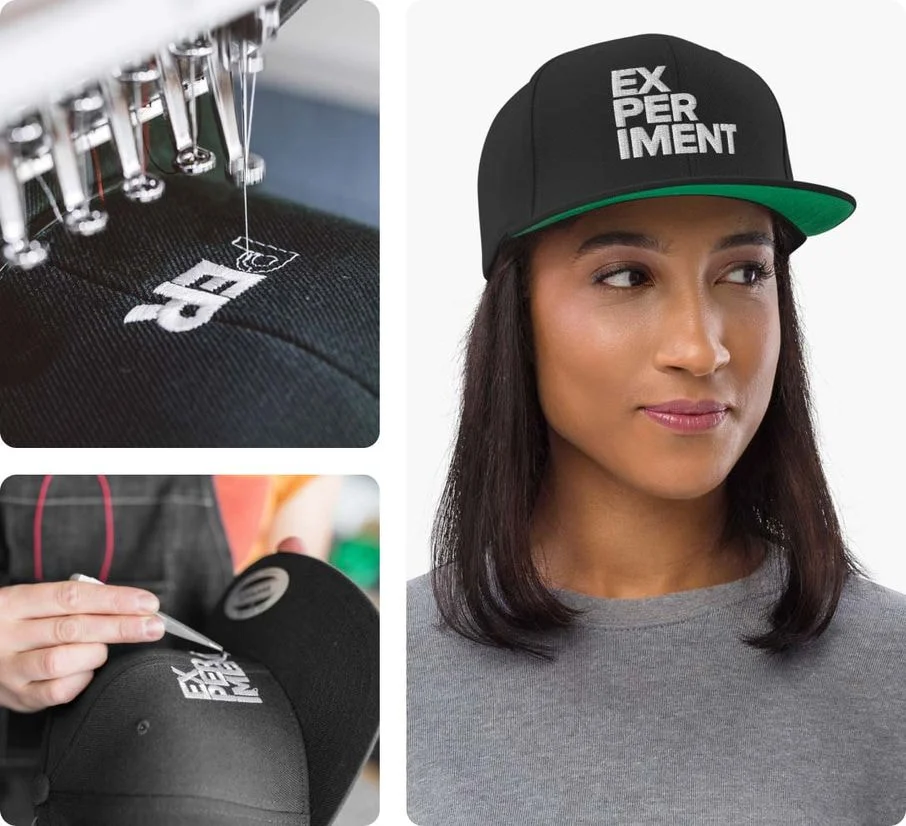
Printful’s reputation for quality is well-earned. Their direct-to-garment (DTG) printing delivers sharp, vibrant color with consistent results. Embroidery work is detailed and clean.
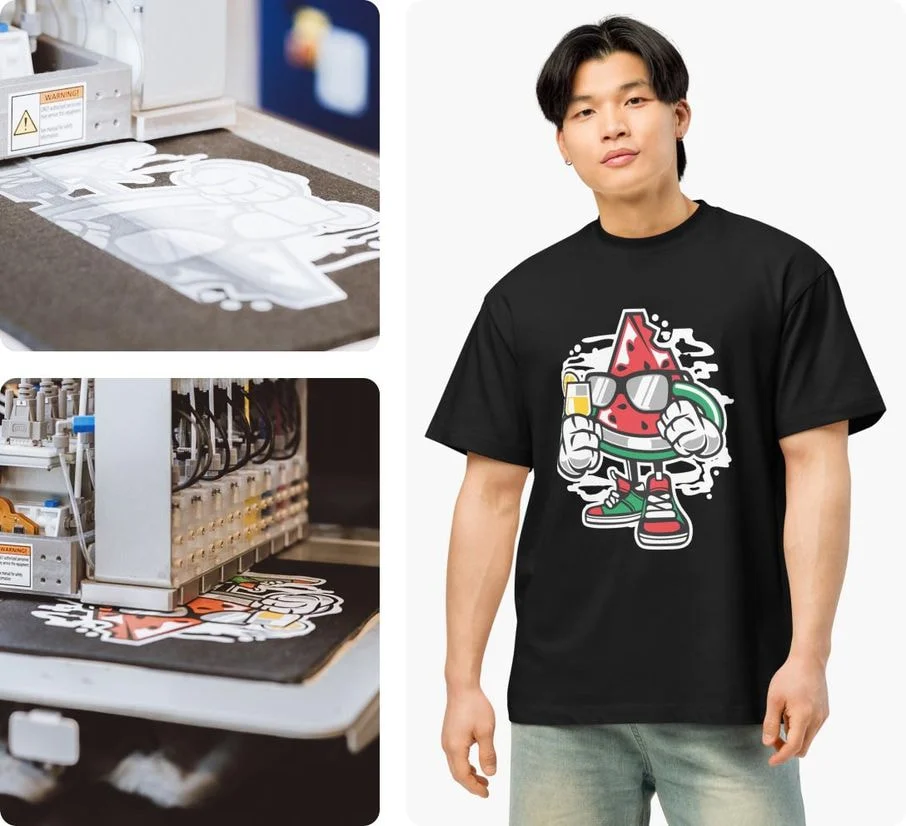
They own 17 production facilities worldwide. When you order from Printful, you know who’s making it, on what equipment, and how. That’s real quality control — something most POD platforms can’t offer.
Printify quality is harder to generalize because you’re working with 90+ different providers using different equipment and processes. Some providers consistently produce output that rivals Printful. Others don’t. You need to look at the catalog ratings, order samples before listing, and pick providers with long track records.
The practical upshot: a top-rated Printify provider can match Printful quality on most products. The difference is that with Printful, you get that quality automatically. With Printify, you earn it through provider selection.
Quality verdict: Printful has the edge for consistent, premium output with zero research required. Printify can match it, but you have to do the homework.
Design Tools
Both platforms include free design tools. You don’t need to arrive with Adobe Illustrator skills to get started.
Printify Product Creator
Printify’s Product Creator is the more capable free tool in 2026, and it’s not particularly close anymore.
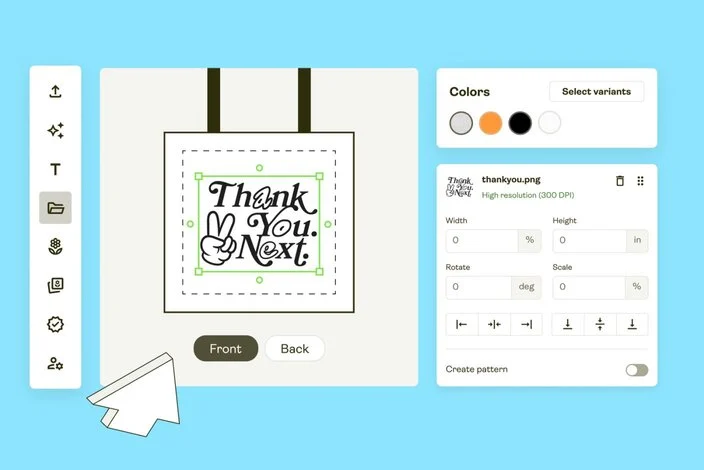
The editor loads in-browser and lets you work directly on a product canvas. You can upload design files:

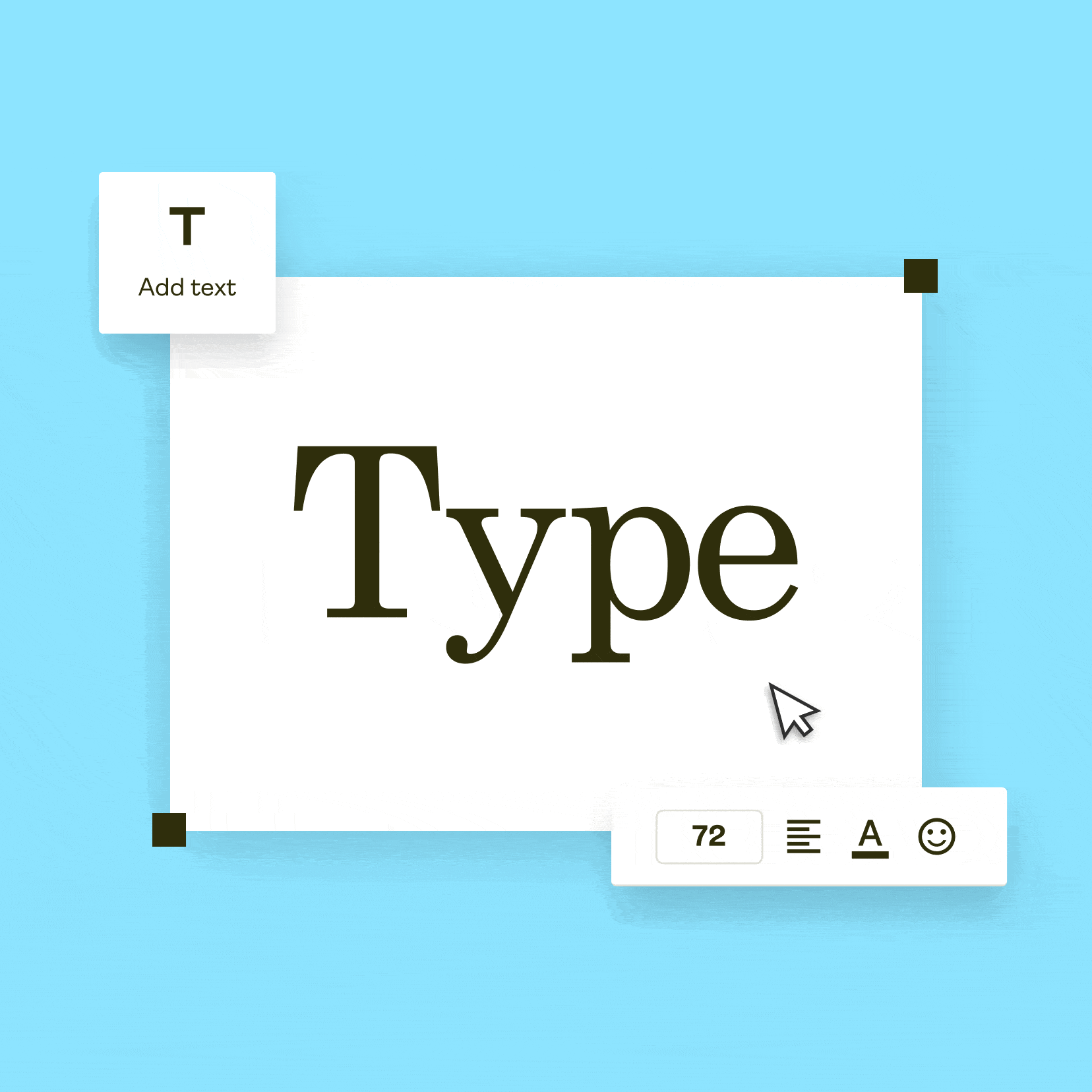
Add and format text with font selection and styling controls:
Manage design layers on complex compositions:

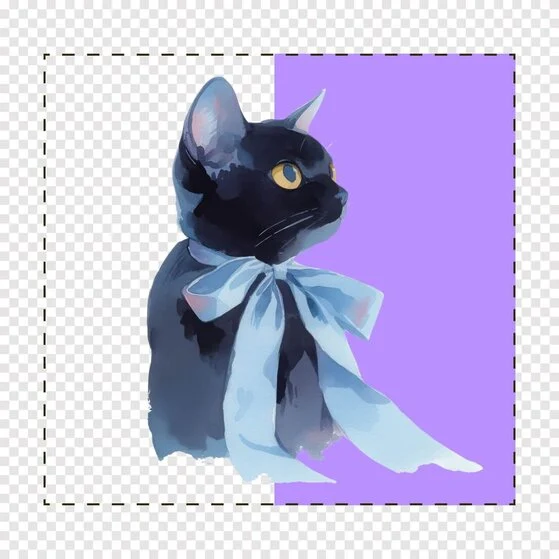
Remove image backgrounds automatically:
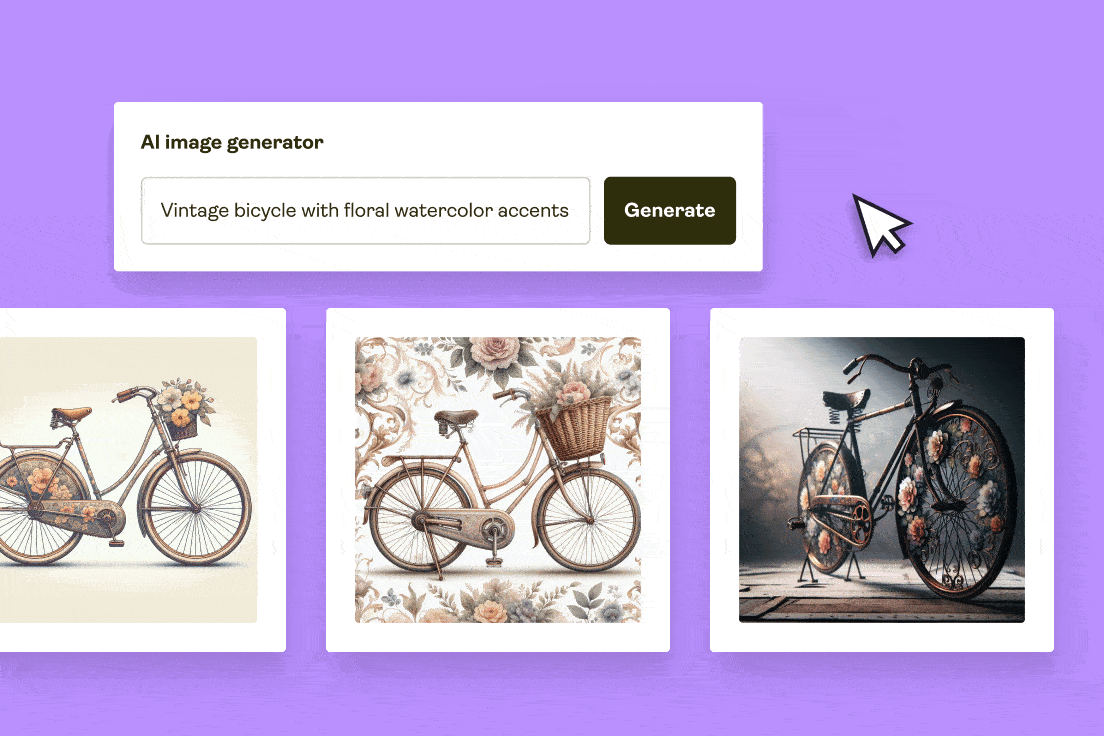
Generate entirely new design images with AI:
And produce professional product mockups for your store listings:

That’s a genuinely capable toolkit for something built into a free POD platform.
Printful Design Tools
Printful includes a mockup generator and a basic design editor. Both are clean, reliable, and cover the standard use cases — placing your design on a product, checking print dimensions, generating store-ready images. The mockup quality is excellent.
What Printful’s tools don’t have: AI image generation, a layers management system, or the breadth of editing controls in Printify’s Product Creator. For sellers who do their design work in external tools (Canva, Illustrator, Photoshop) and just need clean mockups, Printful’s tools are perfectly sufficient.
Design tools verdict: Printify’s Product Creator is the stronger free tool in 2026, particularly for sellers who want AI-assisted design generation without paying for a separate subscription.
Integrations
Both platforms cover the main storefronts without friction.
Shared integrations: Shopify, Etsy, WooCommerce, Wix, BigCommerce, Squarespace, and several others.
Printful exclusive: Amazon and eBay integrations. Printful’s warehousing and fulfillment service also connects directly with these channels — useful if you’re running a hybrid model (some made-to-order, some inventory-based).
Printify additions: TikTok Shop integration. Additional marketplace connectors via API for custom builds.
For most sellers using Shopify or Etsy, the integration story is effectively a wash — both are mature, well-tested, and work reliably. The only scenario where Printful’s integrations give it a meaningful advantage is if you’re actively selling on Amazon or eBay at scale.
Who Should Use Printful
Printful is the right call when:
- Brand consistency is non-negotiable. You need every order to look identical, regardless of which facility produces it.
- You’re doing significant embroidery volume. Printful’s embroidery quality is consistently excellent, and free digitization on the Growth plan is a genuine cost saver.
- You want premium blank brands — Bella+Canvas, American Apparel, Next Level — with reliable availability.
- You need warehousing and fulfillment for products you purchase in bulk. Printify doesn’t offer warehousing.
- You’re building a premium lifestyle brand where per-unit margin is secondary to product quality and presentation.
- You sell on Amazon or eBay and want native channel integration.
Who Should Use Printify
Printify is the right call when:
- You want lower base prices and more margin on mainstream products like t-shirts and hoodies.
- You need products outside the standard apparel categories — pet items, home goods, stationery, specialty accessories.
- You’re building a high-volume store where catalog breadth lets you test product ideas quickly without committing to inventory.
- You want AI design generation built into your workflow without paying for a separate tool.
- You’re managing multiple stores. Printify’s Premium plan covers 10 stores vs Printful’s 5 on the equivalent tier.
- You care about fulfillment flexibility. 90+ providers means more options for local fulfillment and faster shipping to specific regions.
The Verdict
Printify wins for most sellers in 2026.
The 3x larger catalog, lower base prices on comparable items, $24.99/month Premium plan when billed annually, built-in AI design generation, and multi-store support make it the stronger default choice. 10 million+ merchants across the platform means active communities, detailed tutorials, and thousands of honest provider reviews to draw from.
Printful still wins if you’re building a premium brand where every product needs to look like it came from one place, with zero variance between orders. Owning your own production facilities is a real quality control advantage, and no amount of Printify provider research fully replicates that.
Pick based on what matters most to your store. For most people: Printify.
FAQ
Are Printful and Printify the same company?
They share a parent company called FYUL as of November 2024, but operate as fully separate platforms with separate catalogs, pricing, suppliers, and fulfillment networks.
Can I use both Printful and Printify at the same time?
Yes. Many sellers use Printful for specific products — like embroidered hats or premium fleece — and Printify for the rest of their catalog. Both can be integrated with the same Shopify or Etsy store simultaneously.
Which is cheaper, Printful or Printify?
Printify is generally cheaper on a per-product basis because competing suppliers in its network drive prices down. At the subscription level, both platforms charge $24.99/month for their mid-tier annual plans.
Does Printful or Printify have better quality?
Printful has more consistent quality because it owns its production facilities. Printify quality varies by provider — top-rated providers with large order histories can match or exceed Printful’s output, but you need to vet them and order samples.
Which platform has more products?
Printify has significantly more — 1,000+ products from 90+ print providers vs Printful’s approximately 350+. Printify covers product categories that Printful simply doesn’t offer.
Is Printify good for beginners?
Yes. The free plan includes unlimited product designs, the Product Creator is intuitive, and the catalog makes it easy to test different product ideas without upfront inventory costs. The main learning curve is selecting the right print providers — use the catalog ratings and order samples before listing.